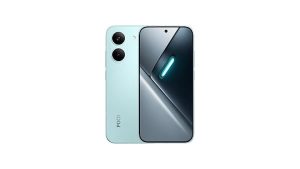
Xiaomi Poco X8 Pro
₱18,377
 Browse all devices
The Xiaomi Redmi Turbo 5 wins this comparison, offering a superior battery (7560 mAh vs 6500 mAh), higher RAM options (up to 16GB vs 12GB), and a lower price (₱18,158 vs ₱18,377), making it the better overall choice for most users.
Winner for most people: Xiaomi Redmi Turbo 5

✎ Edit or add a device Browse all devices
| Spec | Xiaomi Poco X8 Pro | Xiaomi Redmi Turbo 5 |
|---|---|---|
| Display | 6.59" AMOLED, 68B colors, 120Hz, 3840Hz PWM, Dolby Vision, HDR10+, 2000 nits (HBM), 3500 nits (peak), 1268 x 2756 pixels, 19.5:9 ratio (~460 ppi density), Corning Gorilla Glass 7i, Mohs level 5 | 6.59" AMOLED, 68B colors, 120Hz, 3840Hz PWM, Dolby Vision, HDR10+, HDR Vivid, 3500 nits (peak), 1268 x 2756 pixels, 19.5:9 ratio (~460 ppi density) |
| Processor | Mediatek Dimensity 8500 Ultra (4 nm) (Octa-core 3.4 GHz Cortex-A725 & 3x3.2 GHz Cortex-A725 & 4x2.2 GHz Cortex-A725) | Mediatek Dimensity 8500 Ultra (4 nm) Octa-core (1x3.4 GHz Cortex-A725 & 3x3.2 GHz Cortex-A725 & 4x2.2 GHz Cortex-A725) |
| GPU | Mali-G720 MC8 | Mali-G720 MC8 |
| RAM | 8GB RAM, 12GB RAM | 12GB RAM, 16GB RAM |
| Storage | 256GB, 512GB | 256GB, 512GB |
| Main Camera | 50 MP f/1.5 (wide), 8 MP f/2.2 (ultrawide); 20 MP f/2.2 (wide) selfie | Main Camera: 50 MP, f/1.5, 26mm (wide), 1/1.95", 0.8µm, PDAF, OIS 8 MP, f/2.2, 15mm (ultrawide), 1/4.0", 1.12µm | Selfie Camera: 20 MP, f/2.2, (wide), 1/4" |
| Battery | Si/C Li-Ion 6500 mAh | Si/C Li-Ion 7560 mAh |
| Operating System | Android 16, HyperOS 3 | Android 16, HyperOS 3 |
| Connectivity | Wi-Fi 802.11 a/b/g/n/ac/6, dual-band, Wi-Fi Direct; Bluetooth 6.0, A2DP, LE, aptX HD, LHDC 5, Auracast, ASHA; GPS (L1+L5), BDS (B1I+B1c+B2a), GALILEO (E1+E5a), QZSS (L1+L5), NavIC (L5), GLONASS; NFC (market/region dependent); USB Type-C 2.0, OTG | Wi-Fi: Wi-Fi 802.11 a/b/g/n/ac/6, dual-band, Wi-Fi Direct | Bluetooth: 5.4, A2DP, LE, aptX HD, LHDC 5, Auracast, ASHA, MIHC | GPS: GPS (L1+L5), BDS (B1I+B1c+B2a), GALILEO (E1+E5a), QZSS (L1+L5), NavIC (L5), GLONASS | NFC: Yes | Radio: No | USB: USB Type-C 2.0, OTG |
| Dimensions | 201.5g, 8.4mm thickness | 8.2mm thickness |
| Weight | 201.5g | 204g |
| SIM | Nano-SIM + Nano-SIM | Nano-SIM + Nano-SIM |
| Features | Fingerprint (under display, optical), accelerometer, gyro, compass, proximity; IP68/IP69K dust tight and water resistant (high pressure water jets; immersible up to 1.5m for 30 min) IP69K (market/region dependent) | Sensors: Fingerprint (under display, optical), accelerometer, gyro, compass, proximity | Build: Glass front, aluminum frame |
| Price | ₱18,377 | ₱18,158 |
Buy the Xiaomi Redmi Turbo 5 if you prioritize battery life and multitasking performance. Consider the Xiaomi Poco X8 Pro only if you slightly prefer a lighter device (201.5g vs 204g).
Not really, as the Xiaomi Redmi Turbo 5 has a larger battery (7560 mAh vs 6500 mAh), higher RAM options (16GB vs 12GB), and a lower price, making it a better value for most users.
Both have identical camera specifications: a 50 MP main camera with f/1.5 aperture, an 8 MP ultrawide, and a 20 MP selfie camera, so they are tied.
The Xiaomi Redmi Turbo 5 has a larger 7560 mAh battery compared to the 6500 mAh of the Xiaomi Poco X8 Pro, so it should offer longer battery life.
The Xiaomi Redmi Turbo 5 is better value for money because it is cheaper (₱18,158 vs ₱18,377) while offering more RAM and a larger battery.