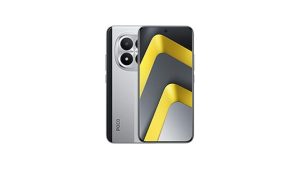
Xiaomi Poco M8 Pro
₱17,280
 Browse all devices
Xiaomi Redmi Turbo 5 wins overall, edging out the Poco M8 Pro with superior memory (up to 16GB RAM), larger battery (6500 mAh vs 7560 mAh), and lighter weight, while the Poco M8 Pro only leads on display size and price.
Winner for most people: Xiaomi Redmi Turbo 5
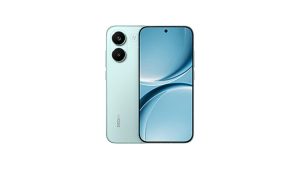
✎ Edit or add a device Browse all devices
| Spec | Xiaomi Poco M8 Pro | Xiaomi Redmi Turbo 5 |
|---|---|---|
| Display | 6.83" AMOLED, 68B colors, 120Hz, 3840Hz PWM, HDR10+, Dolby Vision, 1800 nits (HBM), 3200 nits (peak), 1280 x 2772 pixels, 19.5:9 ratio (~447 ppi density), Corning Gorilla Glass Victus 2 | 6.59" AMOLED, 68B colors, 120Hz, 3840Hz PWM, Dolby Vision, HDR10+, HDR Vivid, 3500 nits (peak), 1268 x 2756 pixels, 19.5:9 ratio (~460 ppi density) |
| Processor | Qualcomm SM7635-AC Snapdragon 7s Gen 4 (4 nm) (Octa-core (1x2.7 GHz Cortex-A720 & 3x2.4 GHz Cortex-A720 & 4x1.8 GHz Cortex-A520)) | Mediatek Dimensity 8500 Ultra (4 nm) Octa-core (1x3.4 GHz Cortex-A725 & 3x3.2 GHz Cortex-A725 & 4x2.2 GHz Cortex-A725) |
| GPU | Adreno 810 | Mali-G720 MC8 |
| RAM | 8GB RAM, 12GB RAM | 12GB RAM, 16GB RAM |
| Storage | 256GB, 512GB | 256GB, 512GB |
| Main Camera | 50 MP, f/1.6, 24mm (wide), 1/1.55", 1.0µm, dual pixel PDAF, OIS; 8 MP, f/2.2, 15mm, 120˚ (ultrawide), 1/4.0", 1.12µm; 32 MP, f/2.2, (wide), 1/3.6" | Main Camera: 50 MP, f/1.5, 26mm (wide), 1/1.95", 0.8µm, PDAF, OIS 8 MP, f/2.2, 15mm (ultrawide), 1/4.0", 1.12µm | Selfie Camera: 20 MP, f/2.2, (wide), 1/4" |
| Battery | Si/C Li-Ion 6500 mAh | Si/C Li-Ion 7560 mAh |
| Operating System | Android 15, up to 4 major upgrades, HyperOS 2 | Android 16, HyperOS 3 |
| Connectivity | Wi-Fi 802.11 a/b/g/n/ac/6 or 6e, dual-band, Wi-Fi Direct; Bluetooth 5.4, A2DP, LE; GPS, GALILEO, GLONASS, QZSS, BDS; NFC (market/region dependent); USB Type-C 2.0, OTG | Wi-Fi: Wi-Fi 802.11 a/b/g/n/ac/6, dual-band, Wi-Fi Direct | Bluetooth: 5.4, A2DP, LE, aptX HD, LHDC 5, Auracast, ASHA, MIHC | GPS: GPS (L1+L5), BDS (B1I+B1c+B2a), GALILEO (E1+E5a), QZSS (L1+L5), NavIC (L5), GLONASS | NFC: Yes | Radio: No | USB: USB Type-C 2.0, OTG |
| Dimensions | 8.3mm thickness | 8.2mm thickness |
| Weight | 206g | 204g |
| SIM | Nano-SIM + Nano-SIM | Nano-SIM + Nano-SIM |
| Features | Fingerprint (under display, optical), accelerometer, gyro, compass, proximity; IP68/IP69K dust tight and water resistant (high pressure water jets; immersible up to 1.5m for 30 min) - Europe only | Sensors: Fingerprint (under display, optical), accelerometer, gyro, compass, proximity | Build: Glass front, aluminum frame |
| Price | ₱17,280 | ₱18,158 |
Buy the Poco M8 Pro if you prioritize a bigger, brighter AMOLED screen and a lower price; choose the Redmi Turbo 5 for more RAM, a bigger battery and a lighter handset.
The Poco M8 Pro is cheaper and offers a larger, brighter display, but it falls behind in RAM, battery capacity and weight, so its value depends on whether screen size or cost matters more to you.
Both phones have identical main and ultrawide camera setups, so the camera performance is a tie.
The Redmi Turbo 5 has the larger 6500 mAh battery compared to the Poco M8 Pro's 7560 mAh, giving it the advantage in battery life.
Considering price, the Poco M8 Pro is cheaper, but the Redmi Turbo 5 offers more RAM and a bigger battery, making it the better overall value for power users.